Accepting new students Book your free consultation
Back to home
Accepting new students for Summer & Autumn 2026

Teaching built around what the examiner actually rewards

Most students don't lose marks because they don't know the content. They lose marks because they've never been taught how to write an answer the way the mark scheme expects. That is the gap Ascera closes, not broadly, but precisely, for each student's exam board, subject, and timeline.

★★★★★ Five-star rated | Enhanced DBS checked | 24h response
0+
Students
taught
0+
Hours of tutoring
delivered
+2 Average grade improvement
across full programmes

Why Ascera exists

Built around a gap most tutors never close

Your child probably knows the content. They have sat through the lessons, worked through past papers, stayed up revising before mocks. But on results day, the mark does not reflect what they know, and nobody can explain why.

The gap lives in something specific: the structure of a six-mark answer, the command word that changes exactly what an examiner wants to see, the mark-scheme language AQA rewards that OCR does not. These details are rarely taught in school. They are almost never covered in standard tutoring sessions. They are precisely what separates a grade 6 from a grade 8.

Ascera was built to close that gap, not broadly, but precisely, for each student's exam board, subject, and timeline. Every programme begins with a proper diagnostic. Every session is planned around mark-yield. Every paper is reviewed by error type, not just scored.

0+
Students taught across GCSE & A-Level
0+
Hours of exam-focused tutoring delivered
+2
Average grade improvement across full programmes
What students need to close the gap
Ascera
School
Exam-board specific mark-scheme language
Every session
Rarely covered
Diagnostic by topic, question type & error pattern
Before session 1
Twice yearly
Sessions sequenced by mark-yield
Built around exam gaps
Follows syllabus order
Paper review by error type, not just score
Full breakdown
Grade returned
Parent update after every session
After each session
Twice yearly report

Our methodology

The Ascera Method, four stages, one clear aim

Every programme runs through the same structured cycle. Not because it is rigid, but because it works. Each stage feeds into the next, and every one is documented and shared with the family.

01
Diagnose

Map exactly where marks are being lost

A diagnostic paper run before the first session identifies gaps by topic, question type, and error pattern, not a broad label like "weak in algebra", but a precise map of what will move the grade.

02
Map

Build a plan ordered by mark-yield

Sessions are sequenced by the gaps that cost the most marks, in the most-tested topics, for this student's specific exam board. The full plan is shared with the family before the first session begins.

03
Deliver

Teach the technique, not just the content

Sessions target mark-scheme language, command word expectations, and answer structures specific to the student's board. The same understanding expressed differently can earn zero marks or full marks, students learn the difference.

04
Track

Review every paper by error type

Practice papers are marked and analysed by error pattern. A consistent pattern triggers an immediate plan review, not a repeated session. If the approach is not producing measurable progress, it is revised.

How every session is run

What you can expect, every time

"Knowing the content is not the same as knowing how to answer the question. Every Ascera session closes the gap between what your child knows and what the mark scheme actually rewards."

01

No filler sessions

Every session your child attends has a specific objective, a defined gap to close, not a topic to get through. You will know what that objective is before the session starts.

In practice: a written session objective is set before every lesson and confirmed with the family at the start of each block.
02

Honesty over comfort

If your child is behind plan, you are told, with a revised approach, not reassurances. Every mock result is broken down by error type so you know exactly what the next sessions are targeting.

In practice: parents receive a written progress note after every session, not just at the end of a block.
03

The student, not the syllabus

Your child's programme is built from their diagnostic, sequenced by the gaps that cost the most marks on their specific exam board, not by what comes next in a textbook.

In practice: the programme plan is reviewed after every mock paper and adjusted if the data says so.

Session planning

Planned around the exam. Sequenced by marks.

Behind every programme is preparation that happens before the student sits down for session one. Here is the work that makes each session worth having.

01
Five years of past papers, before a session is planned Every topic is mapped against its frequency across five years of papers, not just the most recent sitting. Topics that appear in 80% of papers are not weighted the same as those appearing in 20%. Time is allocated by what the exam actually tests, not by where a topic falls in the textbook.
02
Two students. Same topic. Different boards. Different answers required. AQA, OCR, and Edexcel do not mark the same knowledge the same way. The command words differ. The number of marks allocated to the same concept differs. The language a mark scheme rewards, and the language it penalises, differs. Before a session is planned, those distinctions are mapped for this student's board specifically, and built into how answers are structured and taught.
04
With eight to twelve sessions before an exam, there is no margin for topics that can wait The session sequence is built around what moves the grade most. Topics are ordered so each builds on the last, those that unlock marks across multiple question types come first. The plan is not a reading list. It is a sequence with a logic, and every slot in it has to earn its place.
05
After every paper: is this a plan problem or a teaching problem? When a paper comes back below expectation, the first question is not "do they understand this?", it is "is the plan still right?" If the errors cluster around one concept, the teaching approach is revisited. If they spread across topics that were covered separately, the sequencing is the problem, those topics needed to be built together, not apart. That distinction is what stops the same session being delivered twice.

Want to see what a plan looks like for your child's subject and board?

Book a free call

Before session 1, you receive

Spec analysis Topics ranked by past paper frequency and mark-yield
Diagnostic report Gaps mapped by topic, question type, and error pattern
Session plan Objectives sequenced by marks, shared in writing before you begin

Subjects covered

Maths Biology Chemistry Physics Combined Science 11+

Exam boards

AQA OCR Edexcel GL Assessment CEM

Standards & transparency

What every Ascera family receives

Every programme comes with the same commitment to communication, structure, and accountability, from the first session through to results day.

If the approach isn't working, it changes

When a mock paper comes back below expectation, the programme is reviewed before the next session. Results are mapped against the diagnostic baseline by topic and error type. If the pattern points to a sequencing problem, the plan is reordered. If it points to a teaching approach, the approach changes. Families are told exactly what changed and why, not given reassurances.

Session plan shared before you begin

Before each block begins, a structured session plan is shared with the family, covering topics, objectives, and the reasoning behind their sequence. Parents always know what sessions are working toward and why.

Mock papers under timed conditions

Full mock papers are set at regular intervals and sat under timed, exam-condition settings. Every paper is returned with a detailed breakdown by question type and error pattern, not just a score.

Exam-board specific teaching

Sessions are planned around the student's specific exam board, not generic revision. Mark-scheme language, command word expectations, and answer structures vary between boards and are taught accordingly.

Grade progress tracked against the baseline

The diagnostic establishes a baseline before the programme begins, by topic, question type, and gap severity. Every mock result is measured against it. After each paper, families receive a written summary of where the grade stands, what has shifted, and what the remaining sessions are targeting.

What families say

Words from parents and students

A selection of feedback from families who have worked with Ascera across GCSE and A-Level programmes.

★★★★★

"Harsil is an excellent tutor who individually tailors every session to the student. He is professional, friendly and patient, with great knowledge of all GCSE Maths topics. He covered all the Higher level content with me in 4 months and I got the grades I needed for my university place."

GCSE Maths Grade 6 → 8 · Uni place secured
N
Adult learner, returning to education
★★★★★

"Weekly tutoring sessions with Harsil have really helped my daughter revise and consolidate A-Level content for Biology and Chemistry, increasing her knowledge, understanding and confidence. One-to-one sessions have been invaluable in being able to tailor the sessions to specific topics that she needed a bit of extra support with."

A-Level Biology & Chemistry A-Level
P
Parent of Year 13 student
★★★★★

"Just to let you know, my daughter ended up getting 9s in Biology and Chemistry. She worked incredibly hard, but your support definitely played a big part in that."

GCSE Biology & Chemistry Grade 9, 9
P
Parent of Year 11 student

Student outcomes

Teaching that shows up in grades

Each result follows the same process: a diagnostic that maps gaps precisely, a session plan ordered by mark-yield, and teaching built around the student's specific exam board and timeline.

GCSE · AQA
Maths
Year 11 student. Targeted algebra, ratio and exam technique over a 12-week programme.
6
8
+2 grades
A-Level · OCR
Biology & Chemistry
Year 13 student. Intensive exam-technique programme across both sciences in the final term.
A*, A
A* & A
GCSE · Edexcel
Physics
Year 11 student. Focused on calculation methods, required practicals and six-mark questions.
4
7
+3 grades
A-Level · Edexcel
Chemistry
Year 12 student. Exam technique, command word structure and six-mark responses across A-Level topics. Autumn programme.
C
A
+2 grade bands
GCSE · AQA
Biology
Year 11 student. Six-mark extended writing and required practicals addressed over 8 weeks.
5
8
+3 grades
GCSE · Edexcel
Maths
Year 10 student. Targeted algebra, quadratics and problem-solving technique ahead of end-of-year exams.
4
6
+2 grades

All results are real. Names anonymised for privacy. Full details available on enquiry.

About the Founder

Founded by the tutor who was first the student.

Harsil built Ascera around the techniques that changed his own grades — and has held every tutor to that same standard since.
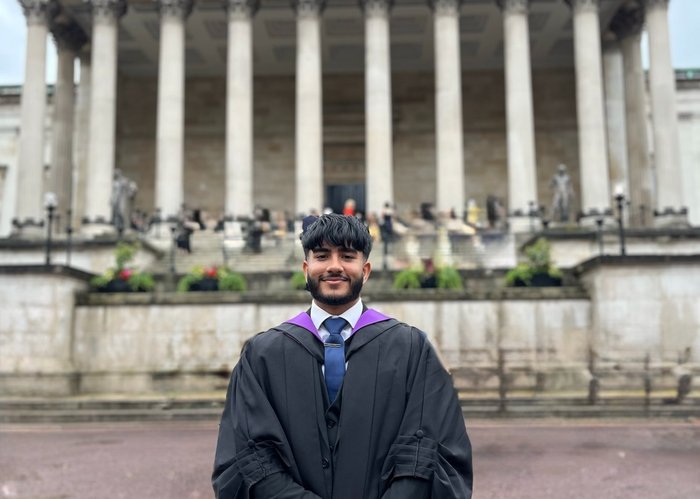
Harsil Dixit, Founder, Ascera Tutoring
Harsil Dixit
Founder & Lead Tutor, Ascera Tutoring
BSc Biomedical Sciences (1st), UCL Enhanced DBS Checked 180+ students tutored 1,000+ hours delivered
Teaches
Maths Biology Chemistry Physics 11+ GCSE & A-Level

Harsil Dixit is a First Class BSc Biomedical Sciences graduate from University College London and the founder of Ascera Tutoring. With over 1,000 hours of one-to-one sessions delivered across 11+, GCSE and A-Level, he has built one of North London's most structured tutoring programmes, one designed entirely around a gap he identified first in his own education and has spent years solving for others.

He was that student. At GCSE, he was doing everything right: every lesson, every homework, every practice paper, and still coming out with grade 5s and 6s. For a long time, he assumed the problem was him. It wasn't.

No one had shown him what an examiner was actually looking for: how to structure a response so every mark is recoverable, how to read a command word and understand precisely what it demands, how to write in the language a specific board rewards. When those things clicked, his grades moved from 5s and 6s to 9s. The gap was not knowledge. It was technique.

When he began tutoring, and later as he built Ascera, he kept meeting the same student. Hardworking. Prepared. Still dropping marks on questions they understood. The problem was almost never content. It was that nobody had taught them how to demonstrate what they knew under exam conditions.

Ascera was built to solve exactly that: a diagnostic that identifies where marks are being lost, a session plan ordered by what moves the grade most, and teaching built entirely around each student's specific exam board rather than a generic curriculum applied to everyone. Every parent receives written updates after each session. Every programme adapts when something is not working. Every student gets an honest assessment of where they are and what is realistic before a single session begins.

He founded Ascera to be the tutor he needed at sixteen.

What this means in practice
Every programme begins with a diagnostic that identifies precisely where marks are being lost, before a single teaching session takes place.
Every session is planned around your child's specific exam board and specification, not a generic curriculum applied to everyone.
Every parent receives a written update after each session, so you always know what was covered, what improved, and what comes next.

Common questions

What parents usually ask before getting started

Answers to the questions that come up most often, straightforwardly, without the sales language.

Most tutoring, whether through an agency or a platform, is generic: the same content, the same structure, regardless of the student in front of you. Ascera is built differently. Every programme begins with a diagnostic that identifies exactly where marks are being lost for that student, on their specific exam board. The session plan is ordered by what moves the grade most, not by what comes next in a textbook. The student who shows up to the first session and the student who sits the exam will have had a programme built entirely around them, not a template applied to them.
Subjects: GCSE: Maths, Biology, Chemistry, Physics, and Combined Science. A-Level: Biology and Chemistry. 11+ preparation is also available.

GCSE & A-Level boards: AQA, OCR, and Edexcel. Sessions are always planned around the specific board, not a generic curriculum.

11+ boards: GL Assessment, CEM, and ISEB. Preparation is tailored to the specific test format your child will sit.
Yes, all sessions are delivered online, which means Ascera is available to students anywhere in the UK. Sessions run via a shared digital whiteboard with screen annotation, so the experience is interactive rather than passive. The same diagnostic-led approach, session plan, and written updates apply regardless of location.
This depends on how many gaps the diagnostic identifies, how far away the exam is, and what grade the student is targeting. A realistic picture is given during the free consultation, not a vague "it depends" but an honest estimate based on the student's actual position. Programmes typically run in blocks, and no long-term commitment is required before the first block begins.
Every programme is tracked against measurable progress, not reassurances. If a paper review shows an error pattern that is not improving, the approach is adjusted, not repeated. If, after a revised approach, the programme still isn't working for the student, that will be said directly rather than continuing sessions that aren't producing results. Honest communication is part of the commitment, not a last resort.
Each session is built around the student's current position, not a fixed syllabus order. It typically opens with a brief review of a past paper question or topic from the previous session, then moves into targeted teaching on the next priority gap, followed by exam-condition practice on that topic. Sessions close with a short summary of what was covered and what to consolidate before the next one. Nothing is left vague, the student leaves every session knowing exactly what to do between sessions.
Progress is tracked against the diagnostic baseline established at the start of the programme, by topic, question type, and gap severity. After each mock or past paper, families receive a written update covering where the grade currently stands, what has shifted since the baseline, and what the remaining sessions are targeting. There are no vague reassurances, if something is not moving, that is communicated directly along with the adjusted approach.
Book a free 30-minute consultation using the link below, or send a message via email or WhatsApp. Share the subject, year group, exam board, and target grade, that is all that is needed to begin. A response arrives within 24 hours.

Ready to close the gaps that matter?

Book a free 30-minute consultation. A clear picture of where the student is and a structured plan for what focused tutoring can do, before any commitment is made.